01 · Analysis
Full analysis in a single view.
See combinations, timeframe continuity, and actionable signals across six timeframes. No chart-hopping required.
A complete rule-based trading system, customizable to how you trade. Built on Rob Smith's TheStrat, and useful for any price action approach.
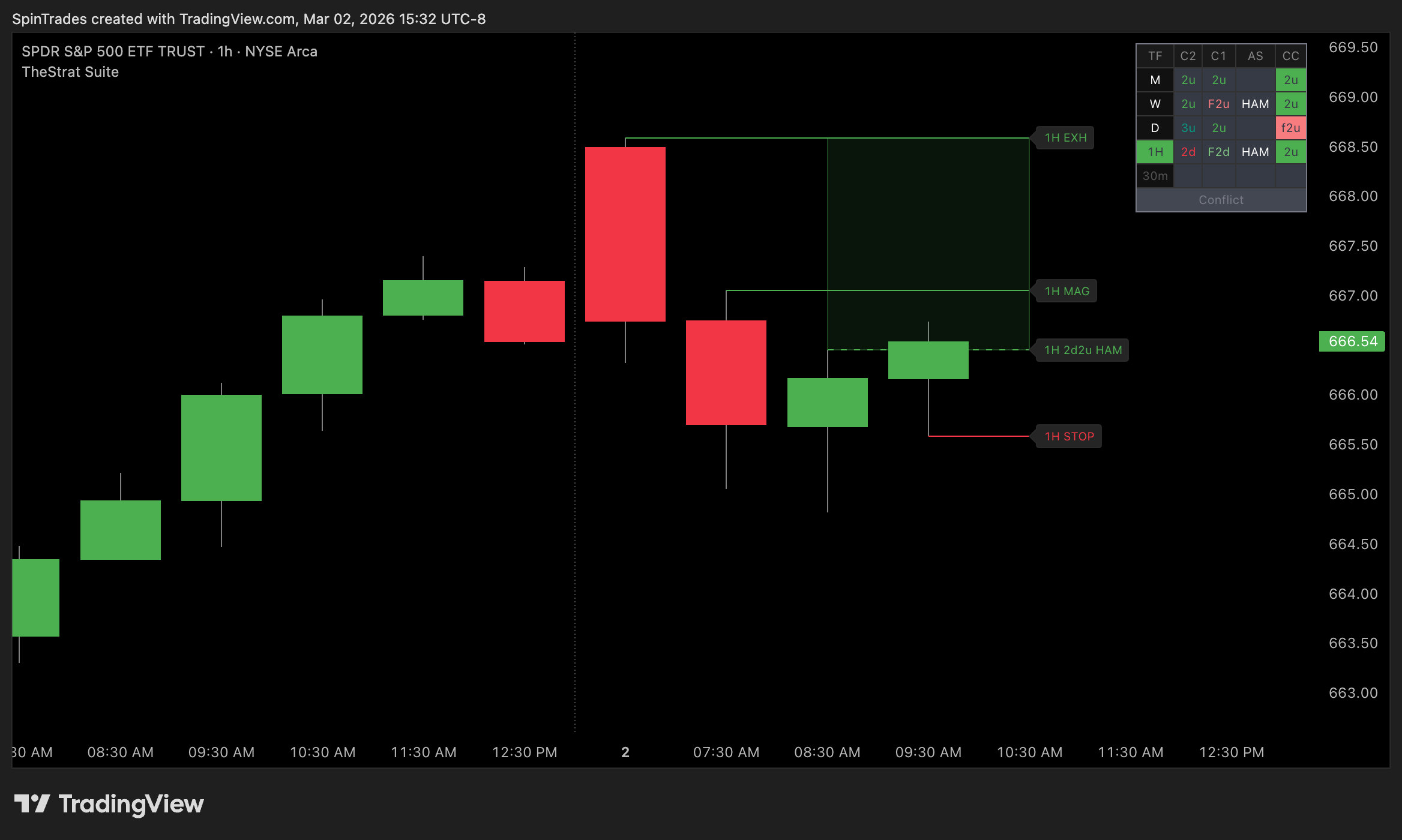
Whether you're new to price action trading or an old vet, you're used to marking up charts. Switching between timeframes. Manually setting alerts. And then doing it all again. TheStrat Suite gives you everything you need to analyze and act on setups across multiple timeframes, all in one place.
See combinations, timeframe continuity, and actionable signals across six timeframes. No chart-hopping required.
Entries, targets, and take action windows, marked automatically.
See when targets are hit, setups invalidate, or new setups form.
Filter by timeframe continuity, actionable signals, Domino setups, and more.
TheStrat Suite is based on TheStrat, a price action trading methodology developed by Rob Smith.
Three annotated frames of the same SPY trade.
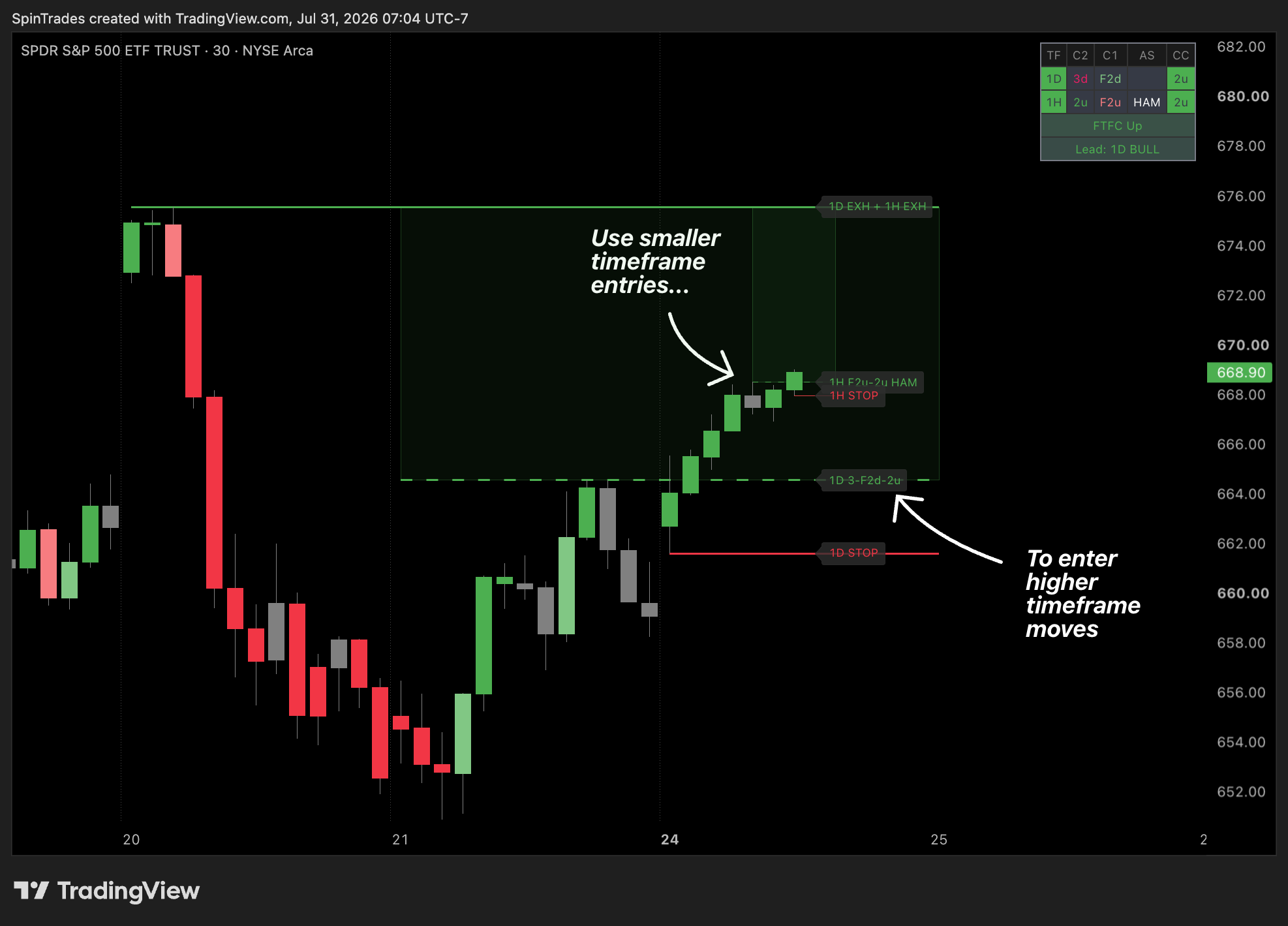
Each line opens that feature's page in the docs: what it does, where its settings live, and how it draws.
Read the docs ▸Built on TheStrat, a price action methodology created by Rob Smith. Made for anyone who trades it, whether you're new to the method or years in.
Install the finished indicator, or fork the source. The published script and the repo carry the same MPL-2.0 code.
The full suite, published on TradingView with the source open. It installs like any other community script and takes about a minute.
It ships with the engineering docs that make it forkable: a documented no-repaint contract, the multi-timeframe correctness rules, and a FIX-tag history of every solved bug. Fork it, or lift the piece you need.
345-strategies/
├─ pine/
│  └─ TheStratSuite_v3.0.0.pine  // the indicator
├─ docs/
│  ├─ concepts/         // trader docs
│  └─ engineering/      // no-repaint & MTF rules
├─ CHANGELOG.md         // every fix, cited by tag
├─ CONTRIBUTING.md
└─ LICENSE              // MPL-2.0
View on GitHub ▸
Open the script page on TradingView and click "Add to favorites." It shows up in your indicators list like any other community script, and there is nothing to sign up for on our end.
The indicator labels each setup in plain English, so a note like "failed 2-down" or "magnitude target hit" makes sense to anyone who reads price action. Learning the framework underneath is worth doing eventually, and the docs' Bar Types and Signals pages are the place to start.
Anywhere TradingView gives you candles, which covers equities, futures, crypto, and FX. Set the six timeframes to whatever cadence you trade.
It started as a subscription. We open sourced it this year because the code improves faster in public, and 345 Strategies pays its bills with other work. The MPL-2.0 license means you're free to use it, modify it, and build on it — and changes to the licensed files stay open if you redistribute them.
Please do. CONTRIBUTING.md has the conventions, the engineering docs cover the no-repaint and multi-timeframe rules a fork needs to keep, and pull requests get reviewed.
No. Completed-bar signals are built from confirmed higher-timeframe data and don't change on a reload. The forming candle updates live by design: that's the trigger you're watching. Markup only comes down when a setup actually invalidates, which is defined behavior, not repainting. The full contract is in the engineering docs.